Fish in focus
Atlantic spadefish fishing in Hampton Roads: bait and rules
Atlantic spadefish combine schooling behavior with structure fishing. Ask whether the proposed trip will look for them specifically, how small baits are presented and what guests do when a school is found.
A round-bodied fish, distinct from sheepshead
Virginia identifies spadefish as Chaetodipterus faber. Florida Museum describes a flattened, disk-shaped schooling fish with tall soft fins; dark bars alone do not make it sheepshead. Confirm the species before applying a rule or choosing food advice.[3] [8]
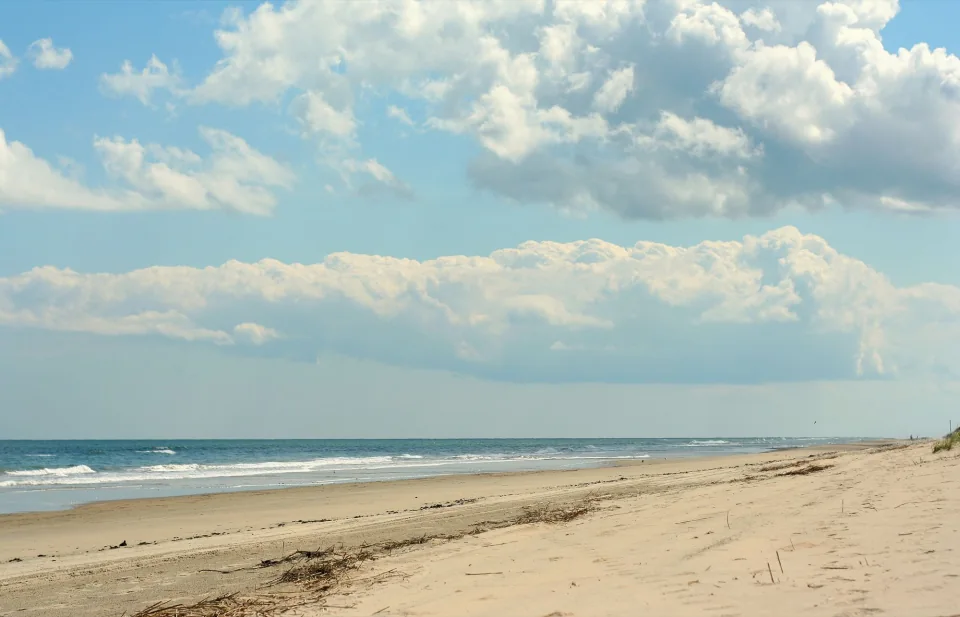
Ask the crew to confirm Atlantic spadefish rather than relying on a general angelfish or drum name. The coastal photograph here sets the scene; it does not identify the fish.
Small baits and visible schools are questions to discuss
Florida Museum describes an invertebrate diet including jellyfish material. VMRC’s older angler guide gives small pieces of shellfish or jellyfish around visible schools near obstructions as examples. Its historical calendar is not a legal season, proof of present fish or permission to collect a particular bait.[8] [9]
Ask which bait the captain supplies and how guests will present it. Does the trip expect a visible-school approach, another structure method or a mixed plan? Specific instruction matters more than arriving with a universal hook size or a promise from a fishing report.
If your group is new, read the beginner-methods guide and explain what you would like to handle yourself. Ask how the crew manages several anglers when the opportunity is concentrated around one school.
An operator species list is not an exact itinerary
E-Fishinsea names spadefish in a bundled inshore/nearshore offering. AfishinadoVB describes them in its nearshore program, and Reel Tails includes them in a mixed operator species list. Ask each operator which specific outing would pursue spadefish; its general species list cannot answer that booking question.[10] [11] [12]
Ask the operator which actual product fits that goal and how departure, travel and fishing time compare. Confirm the alternative if the target is not practical. The presence of a species link does not establish current availability or that every trip from that departure pursues it.
Local charters to explore
These examples connect the guide to public operator information. Inclusion is not an endorsement or a claim of availability.
E-Fishinsea Sport Fishing Charters
Spadefish is explicit in the bundled program, without an exact-duration binding.
Departure: Rudee Inlet · Inlet Station Marina. See the profile for meeting details and sources.
[10]AfishinadoVB Fishing Charters
Its nearshore program names spadefish; ask which present product fits.
Departure: Rudee Inlet · Inlet Station Marina. See the profile for meeting details and sources.
[11]Reel Tails Sportfishing
Spadefish is in its operator target list, without a verified individual product association.
Departure: Poquoson (boarding dock to confirm). See the profile for meeting details and sources.
[12]
Keep Virginia and South Atlantic scopes apart
Checked 2026-10-20 UTC. The South Atlantic example is included to prevent a common geographic mistake, not to grant permission to bring extra fish back to Virginia. A separate Virginia-adjacent federal allowance was not established in this review.
On a small screen, scroll the table sideways. With the table focused, use Left and Right arrow keys.
| Scope | Rule checked2026-10-20 | What to confirm |
|---|---|---|
| Virginia recreational | 4 possessed; further fish returned immediately. Common hold uses legally eligible persons aboard×4.[4] | Captain/operator responsible; separate commercial 6 fish not substituted. Relevant provision amended 2002-01-01. |
| Virginia minimum | VMRC summary lists no minimum size; reviewed chapter has no seasonal closure.[5] [4] | 22 in release citation is not a legal minimum. Check current notices. |
| South Atlantic federal | Spadefish appears in a 20 combined aggregate, maximum 10 of one listed species in that rule.[6] [7] | Different region: boundary extends east from VA/NC seaward line. Not Virginia landing authorization or a local charter allowance. |
Check the catch location and the people eating it
Atlantic spadefish is not individually listed in the reviewed FDA/EPA chart, so no category is assigned. Florida Museum reports spadefish-associated ciguatera cases. CDC describes ciguatera chiefly in tropical and subtropical marine settings; this research did not establish a Virginia incidence or risk rate. CDC explains that cooking or freezing does not destroy ciguatoxin. Normal cooking is not a treatment for every contaminant.[14] [8] [15]
Use the actual catch location to find VDH’s current table, including any broader waterbody restrictions. The absence of an individual spadefish entry does not establish unlimited consumption, and a lawful keeper is not automatically a suitable meal.[2]
Plan cleaning, cold storage and the journey home with our catch-handling guide. Keep only what you can properly transport and use; buying fish is an option when the trip produces no lawful or suitable catch.
A cooked preparation to try
This ginger-lime preparation is for properly sourced fish suitable for your diners. Cooking is a handling step, not a way to remove every contaminant. If suitability remains uncertain, choose a different properly sourced meal rather than relying on the recipe.
Ginger-lime baked Atlantic spadefish
Original, untested recipe suggestion; four modest adult portions from 1 lb raw fillets. Use properly sourced fish that is suitable for the people eating it.
Ingredients
- 1 lb properly sourced, boneless fish fillets, divided into four portions
- 1 tbsp neutral cooking oil
- 1 tbsp lime juice plus wedges
- 1 tsp finely grated fresh ginger
- 1 small garlic clove, minced
- ¼ tsp salt and black pepper
Method
- Heat the oven to 400°F and lightly oil a baking dish. Check the properly sourced fillets for bones.
- Mix oil, lime, ginger and garlic; brush over the chilled portions and season. Keep raw-fish utensils separate.
- Use a food thermometer at the thickest part: cook to 145°F/63°C. Timing depends on thickness and equipment; appearance alone is not the endpoint. Move the fish to a clean serving plate.
- Serve with cooked rice and green vegetables. Promptly refrigerate leftovers in shallow containers. Reheat leftovers to 165°F/74°C. This cooked suggestion does not remove contaminant-advisory restrictions.
Sources, dates and editorial notes
This guide uses official public sources and editorial planning suggestions. Source-check dates are separate from article publication dates. It is not firsthand reporting, named expert review, a current bite report or individual legal or medical advice. Check the current rules, forecasts and operator’s terms for your trip.
- U.S. Food and Drug Administration: Selecting and Serving Fresh and Frozen Seafood Safely
Checked . Source publication date not stated. General seafood storage, cross-contamination and cooking advice, not a contaminant clearance or operator inspection.
- Virginia Department of Health: Fish Consumption Advisories
Checked . Source publication date not stated. Source displays update 2026-08-11. Species, catch waterbody and reach determine applicability. Vulnerable-consumer advice and linked tables must be checked.
- Virginia Administrative Code: 4VAC20-970-20: Definitions
Checked . Source publication date not stated. Chaetodipterus faber exact species identity.
- Virginia Administrative Code: 4VAC20-970-30: Possession limit
Checked . Source publication date not stated. Latest relevant amendment effective 2002-01-01. Four recreationally; immediate release after limit; eligible-person common hold. Separate commercial six not adopted.
- Virginia Marine Resources Commission: Current Marine Recreational Regulations
Checked . Source publication date not stated. Current state summary; citation thresholds are distinct from legal minimums; check current notices.
- eCFR / NOAA: 50CFR622.187: South Atlantic bag limits
Checked . Source publication date not stated. South Atlantic spadefish aggregate is geographically scoped and not Virginia authorization; upcoming unrelated grouper amendment not used.
- eCFR / NOAA: 50CFR600.105: Regional boundaries
Checked . Source publication date not stated. Retrieved public consolidation displayed currency through 2026-08-13; no newer boundary consolidation claimed. South Atlantic boundary extends east from Virginia/North Carolina seaward boundary. Not a Virginia charter itinerary.
- Florida Museum of Natural History: Atlantic Spadefish
Checked . Source publication date not stated. Source displays update 2025-05-29. Schooling, body/fins and invertebrate diet. Reported ciguatera context does not establish Virginia incidence.
- Virginia Marine Resources Commission: How, When & Where to Catch
Checked . Source publication date not stated. Undated historical guidance; no new publication date assigned. Undated older educational guide: bait/method/structure examples only. Calendar months and records not current rules or bite evidence.
- E-Fishinsea: E-Fishinsea Sport Fishing Charters
Checked . Source publication date not stated. Spadefish named in bundled inshore/nearshore program; no individual duration inferred.
- AfishinadoVB: Near Shore Fishing Charters
Checked . Source publication date not stated. Sheepshead and spadefish in nearshore program; rates durations not joined into invented product targets.
- Reel Tails Sportfishing: Learn More
Checked . Source publication date not stated. Spadefish in mixed operator species list only; no exact trip binding.
- FoodSafety.gov: Safe Minimum Internal Temperatures
Checked . Source publication date not stated. Source displays update 2024-11-21. Thermometer endpoints: finfish 145°F/63°C; reheated leftovers 165°F/74°C. No recipe testing claimed.
- FDA / EPA: Advice about Eating Fish
Checked . Source publication date not stated. Advice revised October 2021; retrieval is not a new advice date. Exact Spanish mackerel/Sheepshead Good Choice entries for named populations. No inferred category for red drum, tautog, spotted seatrout or spadefish.
- Centers for Disease Control and Prevention: Food Poisoning from Marine Toxins
Checked . Source publication date not stated. Source displays update 2025-04-23. Histamine/ciguatoxin not destroyed by cooking/freezing. No Virginia spadefish incidence or individualized risk estimated.