Fish in focus
Cobia in Hampton Roads: plan the outing before the keeper
A careful look at cobia identity, coastal tactics, Virginia’s dated retention rules and an original cooked preparation. No current bite or keeper is promised.
Know the fish and the question
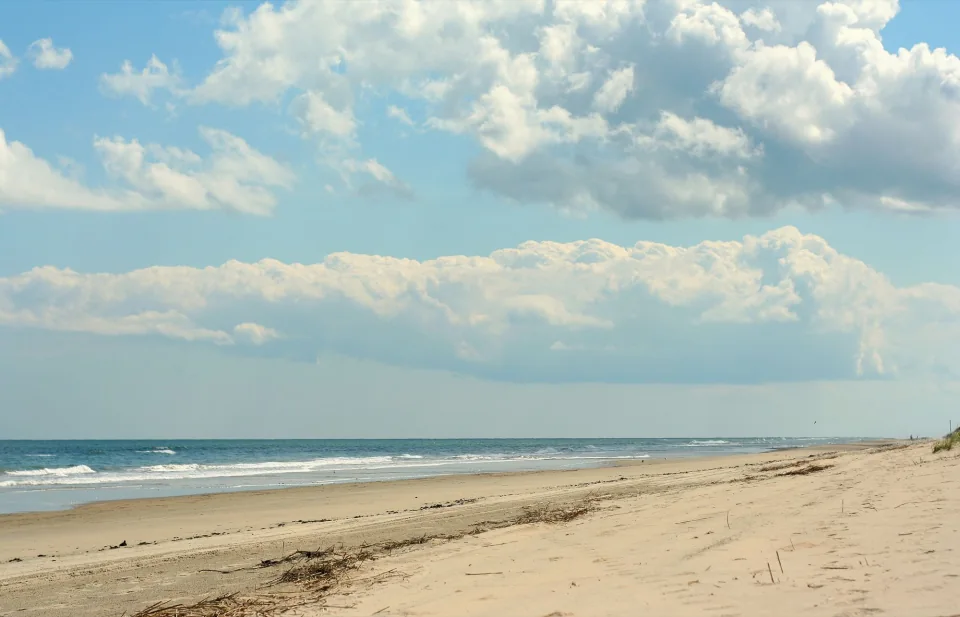
Cobia is Rachycentron canadum, an elongated coastal fish associated with structure such as buoys, reefs and wrecks. A distant dark shape is not enough to identify a legal fish. Ask the crew to identify and measure the actual catch before any retention decision; the regional photograph here is scenery, not an identification plate.Sources: NOAA Fisheries: Cobia; NC DEQ: Cobia.
Start with whether your group wants to learn a technique, spend a day on the Bay, or try for a particular fish. A species appearing on an operator page is a planning lead. It does not establish which route the captain will choose, whether the weather supports sight fishing, or what your selected trip will target.
Bay movement and techniques to discuss
Virginia Sea Grant’s account of VIMS research describes summer cobia migration into Chesapeake Bay and winter movement offshore. NOAA describes broader south/offshore movement in late fall and winter. These are seasonal patterns and historical research context, not arrival dates or a current Hampton Roads fishing report.Sources: Virginia Sea Grant: Fishing for answers about cobia and climate change; NOAA Fisheries: Cobia.
NC DEQ gives sight-casting bucktail jigs and live-bait bottom fishing around reefs or wrecks as cobia technique examples. E-Fishinsea describes sight casting and chumming/live bait for its own program. These are options to ask about, not a tackle prescription or permission to use any gear in Virginia.Sources: NC DEQ: Cobia; E-Fishinsea: Cobia Fishing Charters.
Ask how much travel time is included, whether everyone can participate in the proposed method, and what the alternate plan is if visibility, sea state or fish location changes. Let the captain choose suitable tackle and handling procedures for the actual boat and conditions.
Virginia retention snapshot:2026
On a small screen, scroll the table sideways. With the table focused, use Left and Right arrow keys.
| Scope or question | Verified snapshot | What it means for your trip |
|---|---|---|
| Virginia recreational size | At least 43 inches TOTAL length.Sources: Virginia Administrative Code: 4 VAC 20-510-30 Size limits; Virginia Administrative Code: 4 VAC 20-510-12 Definitions. | Measure straight from closed-mouth snout to longer tail lobe, tail compressed; do not substitute fork length. |
| Virginia possession and vessel | 1/person at any time; at most 2/recreational vessel/day.Sources: Virginia Administrative Code: 4 VAC 20-510-20 Recreational fishery possession limits, season, and vessel allowance. | Common-hold counting uses legally eligible people; the vessel ceiling still applies. Captain/operator responsible. |
| Virginia season and handling | June 15–September 20; gaffing or attempting to gaff prohibited.Sources: Virginia Administrative Code: 4 VAC 20-510-20 Recreational fishery possession limits, season, and vessel allowance; Virginia Administrative Code: 4 VAC 20-510-12 Definitions; Virginia Administrative Code: 4 VAC 20-510-30 Size limits. | Current §§20/30 amendments effective 2025-04-01. No paid-charter exemption from recreational rules. |
| Federal Atlantic cobia | Federal text uses 36 inches FORK length,1/person and a 6-fish daily vessel ceiling, but requires more restrictive state measures off that state.Sources: eCFR: 50 CFR 697.28 Atlantic migratory group cobia. | These are distinct measurements/scopes. Do not replace Virginia’s 43 inches TOTAL or 2-fish vessel ceiling. |
| Crew and overnight trips | No larger Virginia for-hire allowance was found in the audited provisions.Sources: Virginia Administrative Code: 4 VAC 20-510-20 Recreational fishery possession limits, season, and vessel allowance; eCFR: 50 CFR 697.28 Atlantic migratory group cobia. | Federal >24 h charter exception has conditions; it does not override stricter Virginia possession rules. Crew eligibility needs agency/operator confirmation. |
Checked 2026-10-19 UTC. The Virginia season below has ended for 2026; this article is not permission to harvest, possess, target or release fish outside applicable rules. Confirm current notices and your precise waters before departure.
Catch location and consumer advice before cooking
Check the VDH advisory for the actual catch location, not the departure dock. The James River I-95 bridge in Richmond–Hampton Roads Bridge-Tunnel reach and specified tidal tributaries have an all-species Kepone recommendation of no more than one 8-ounce meal/day unless a stricter fish-specific recommendation applies. Absence from a named-fish row does not mean unrestricted consumption. VDH advises pregnant or potentially pregnant women, nursing mothers and young children not to eat fish listed in an advisory.Sources: Virginia Department of Health: Fish Consumption Advisory; Virginia Department of Health: James River Basin fish consumption advisories.
Cobia is not a named entry in the reviewed FDA/EPA fish-choice chart. Do not call it a Best Choice or assume an unlisted fish is low in mercury. The chart serves people who might become or are pregnant/breastfeeding and children 1–11; consult its current advice and a health professional where needed. Choosing properly sourced purchased fish—or a different listed fish—is separate from whether a charter catch may legally be kept.Sources: FDA/EPA: Advice about Eating Fish.
Cleaning or cooking does not reduce mercury. Cooking is not an override of a catch-location consumption advisory. These consumer recommendations are separate from legal harvest limits, and individual medical or allergy needs can require different choices.Sources: FDA/EPA: Questions & Answers from FDA/EPA Advice about Eating Fish; Virginia Department of Health: Fish Consumption Advisory.
Original cooked preparation
Lemon-paprika baked cobia
Original, untested recipe suggestion; four modest adult portions from 1 lb raw fillets. Use properly sourced fish that is suitable for the people eating it.
Ingredients
- 1 lb properly sourced, skinless cobia fillets, divided into four portions
- 1 tbsp olive oil
- 1 lemon:1 tbsp juice plus wedges
- 1 small garlic clove, minced
- 1 tsp sweet paprika;¼tsp salt; black pepper to taste
- 2 tbsp chopped parsley
Method
- Heat the oven to 400°F. Put a lightly oiled oven-safe rack over a lined tray so drippings can fall away. This is an original, untested home preparation suggestion.
- Mix oil, lemon juice, garlic and paprika. Brush over the fish and season. Keep the fish refrigerated until the oven is ready; do not use raw-fish marinade on cooked food.
- Bake until a food thermometer in the thickest part reaches 145°F/63°C. Start checking around 10 minutes; thickness and oven performance can require longer. Discard drippings rather than turning them into sauce.
- Move to a clean plate, add parsley and lemon wedges, and serve with cooked vegetables. Promptly chill leftovers in shallow containers. Reheat leftovers to 165°F/74°C.
Sources: FoodSafety.gov: Cook to a Safe Minimum Internal Temperature; FDA: Safe Food Handling.
This is an original recipe suggestion, not a tested catch-to-table experience. A charter listing is not a promise of fish to take home. Use legally retained fish only after checking catch-location/consumer advice, or buy properly sourced fish suitable for your household.
Keep the fish chilled during the ride home and refrigerate at 40°F or below. FDA advises using purchased seafood within two days or freezing it; its storage chart gives fresh fish 1–2 days and cooked fish 3–4 days when properly refrigerated. That timing assumes proper earlier handling: it does not make a warm or mishandled catch safe.Sources: FDA: Selecting and Serving Fresh and Frozen Seafood Safely; FDA: Refrigerator & Freezer Storage Chart.
Separate raw fish and its utensils from ready-to-eat food. Marinate only in the refrigerator. Refrigerate perishables within two hours, or one hour when the temperature is above 90°F, and divide leftovers into shallow containers. Use a thermometer: finfish 145°F/63°C; reheat leftovers to 165°F/74°C. Cooking time alone is not a safety test.Sources: FDA: Safe Food Handling; FoodSafety.gov: Cook to a Safe Minimum Internal Temperature.
Before you choose a cobia outing
- Which exact trip description supports cobia, and what alternative target or route might be used?
- Which waters and landing state apply, and how will size, vessel possession and release decisions be handled?
- Who supplies bait/tackle, how much time is travel, and what cold-storage arrangements exist?
- Can the operator confirm catch location for consumption-advisory checks, without promising a keeper?
Use the linked examples to have a specific conversation. A dedicated cobia program can differ from a general Bay trip that mentions cobia among several possibilities. Ask what is realistic for your date without treating a published species list as live availability.
Examples to compare, not endorsements.
These existing listings connect the planning questions to verified public operator information. Inclusion does not imply a partnership, a recommendation or availability.
Hookz Sportfishing
Its Half Day Bay product explicitly includes Cobia among possible targets; this is product-description evidence, not an exclusive cobia trip.
Published departure: Private Lynnhaven River dock. See the profile’s field-level sources and unknowns.
Source-identified product: Half-day Bay. Confirm its current plan with the operator.
Sources: Hookz Sportfishing: Virginia Beach Fishing Trips.E-Fishinsea Sport Fishing Charters
The operator publishes a dedicated cobia program; its labels do not establish a species binding for every catalog inshore/nearshore trip.
Published departure: Rudee Inlet · Inlet Station Marina. See the profile’s field-level sources and unknowns.
Sources: E-Fishinsea: Cobia Fishing Charters.
Sources, dates and editorial limits
Source check dates are distinct from an article’s publication date. Missing source dates remain unknown. This source-based article is not firsthand reporting, legal advice, medical advice or a live fishing report. Check current official rules, forecasts and the operator’s exact terms before acting.
- NOAA Fisheries: Cobia
Checked . Source publication date not stated. Source displays update 2026-09-24. Scientific name, structure habitat and broad movement; Gulf stock/status/numeric rules are not Virginia rules.
- NC DEQ: Cobia
Checked . Source publication date not stated. Agency educational identification/fishing-technique examples. North Carolina rules on this page do not apply to Virginia.
- Virginia Sea Grant: Fishing for answers about cobia and climate change
Checked . Source publication date: 2022-06-16. Historical VIMS research/extension context for summer Chesapeake Bay movement; no fixed annual arrival or current report.
- Virginia Administrative Code: 4 VAC 20-510-12 Definitions
Checked . Source publication date not stated. Virginia recreational vessel definition and total-length basis.
- Virginia Administrative Code: 4 VAC 20-510-20 Recreational fishery possession limits, season, and vessel allowance
Checked . Source publication date not stated. Recreational persons/vessels including charters; current season, vessel ceiling and gaff prohibition.
- Virginia Administrative Code: 4 VAC 20-510-30 Size limits
Checked . Source publication date not stated. 43-inch recreational total length; commercial size is distinct.
- eCFR: 50 CFR 697.28 Atlantic migratory group cobia
Checked . Source publication date not stated. Retrieved text displayed currency through 2026-10-15; check current version before a trip. Federal Atlantic cobia and more-restrictive-state rule; overnight charter exception is not a Virginia override.
- FoodSafety.gov: Cook to a Safe Minimum Internal Temperature
Checked . Source publication date not stated. Source displays update 2024-11-21. Consumer finfish 145°F/63°C and reheated leftovers 165°F/74°C, measured with thermometer.
- FDA: Selecting and Serving Fresh and Frozen Seafood Safely
Checked . Source publication date not stated. Consumer chilled transport,40°F storage and purchase-based two-day guidance. Does not reset prior temperature abuse.
- FDA: Safe Food Handling
Checked . Source publication date not stated. Consumer separation, refrigerator marination and two-hour/one-hour-above 90°F limits; shallow leftover containers.
- FDA: Refrigerator & Freezer Storage Chart
Checked . Source publication date not stated. Chart itself is dated March 2018; exact day unknown. Still publicly served, not a new publication date. 40°F-or-below freshfish 1–2 days/cookedfish 3–4 days, with proper prior handling.
- FDA/EPA: Advice about Eating Fish
Checked . Source publication date not stated. Chart explicitly revised October 2021; exact day not stated. Black sea bass and Chilean sea bass are distinct entries. Exact named categories and serving guidance for pregnancy/breastfeeding and children 1–11; local advisories remain applicable.
- Virginia Department of Health: Fish Consumption Advisory
Checked . Source publication date not stated. Source displays update 2026-08-11. Catch-location-specific advisory and vulnerable-consumer advice; no unrestricted-consumption inference from absent named fish.
- Virginia Department of Health: James River Basin fish consumption advisories
Checked . Source publication date not stated. Current PDF linked by VDH; filename 2026 is not independently a publication date. No explicit revision date displayed. Exact James I-95 bridge–HRBT reach and specified tributaries:Bluefish PCB 2 meals/month; all-speciesKepone 1 meal/day if no stricter advice. Meal 8 oz.
- Hookz Sportfishing: Virginia Beach Fishing Trips
Checked . Source publication date not stated. Explicit individual-product descriptions, including named Bluefish/Spanish mackerel and Bay Cobia. Generic sea bass remains unbound.
- E-Fishinsea: Cobia Fishing Charters
Checked . Source publication date not stated. Cobia program and operator-specific technique only; undated operator legal-size statement not used.
- FDA/EPA: Questions & Answers from FDA/EPA Advice about Eating Fish
Checked . Source publication date not stated. Consumer-specific advice, unlisted category uncertainty, mercury not removed by cleaning/cooking. No visible update date.